Therapy
Finding a Therapist in Monmouth and Ocean County, NJ: A Local Guide
Written by
Inner Clarity
July 8, 2026
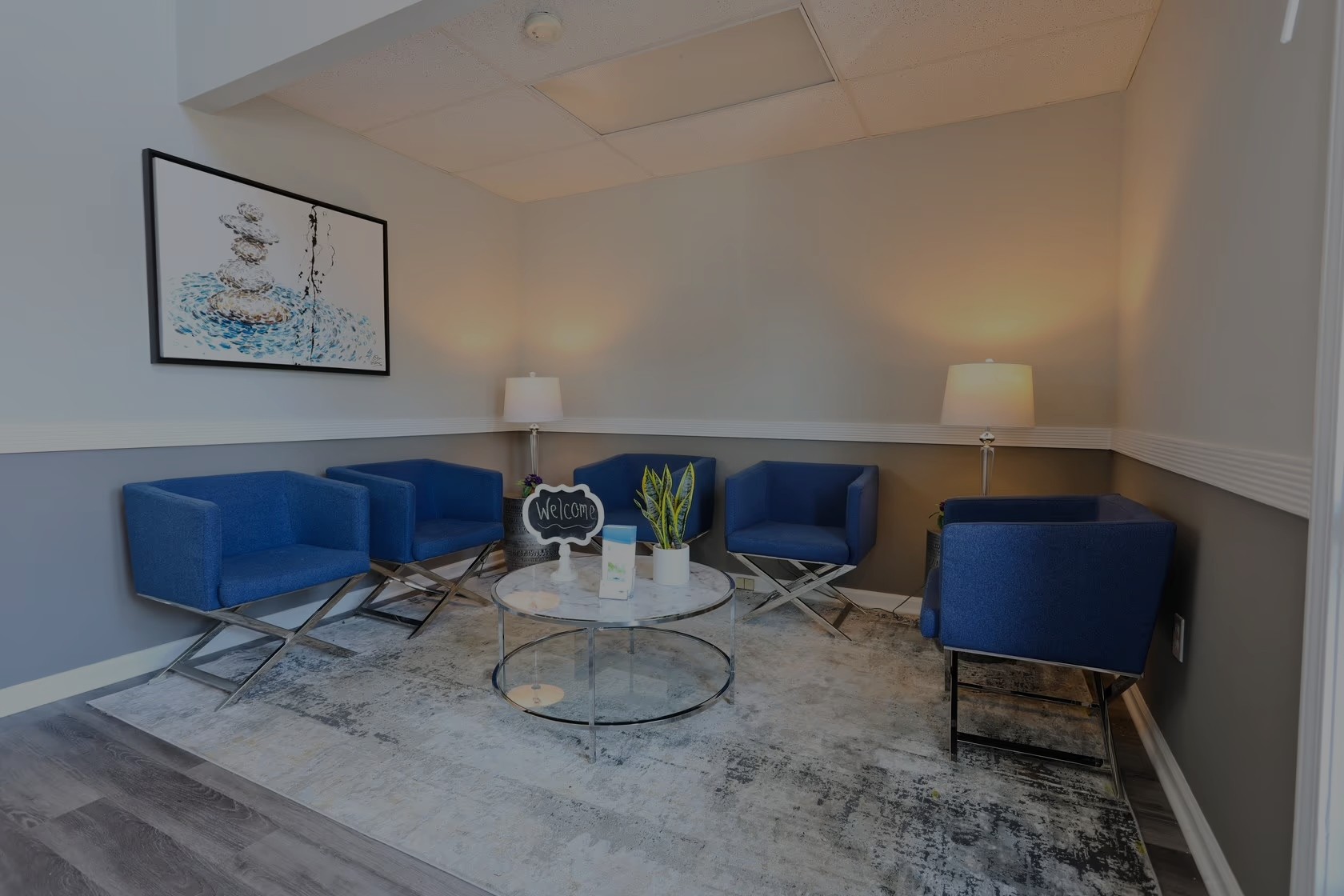


To find a therapist in Monmouth County or Ocean County, NJ, start with three questions: do you want in-person or online sessions, does the therapist treat your specific concern, and do they work with your insurance? Local practices such as Inner Clarity offer offices in Hazlet, Tinton Falls, and Toms River, plus telehealth across New Jersey.
Key takeaways
Where can you see a therapist in Monmouth and Ocean County?
Inner Clarity offers in-person therapy at several points across the Monmouth and Ocean County area, so most residents can find an office within a reasonable drive. In Hazlet there are two offices: one at 22 Village Court and one at 1 Bethany Road. The practice also sees clients in Tinton Falls and, for Ocean County residents, in Toms River.
If you live in a nearby town such as Middletown, the Hazlet offices are usually the closest option. Beyond the Monmouth and Ocean footprint, Inner Clarity also serves clients in Bordentown and Maplewood, with the Maplewood area also serving surrounding Essex and Union County communities including Short Hills, Millburn, Summit, Springfield, and South Orange.
You can see the full office list on the New Jersey offices page, browse every community served on the locations page, or read about online therapy across New Jersey if there is no office near you.
How do you choose the right local therapist?
Choosing a therapist comes down to four checks: a New Jersey license, experience with your specific concern, an approach that fits how you want to work, and practical logistics like location and schedule. Here is how to think through each one.
Confirm licensure in New Jersey
Every therapist you consider should hold an active New Jersey license, whether that is an LPC, LCSW, LMFT, psychologist, or an associate-level clinician working under supervision. Licensure means the state has verified their training and holds them to professional standards. For online sessions, the therapist must be licensed in the state where you are located during the appointment, so NJ residents should look for NJ-licensed clinicians.
Match the specialty to your concern
A counselor in Toms River who mainly sees couples may not be the best fit for a teen with school anxiety, and vice versa. Look for a clinician who regularly treats what you are coming in for, whether that is anxiety, depression, grief, trauma, relationship strain, or something you cannot quite name yet. Specialty experience often shows up in therapist bios, practice specialty pages, and the questions a clinician asks during your first call.
Ask about the approach
Therapists work in different ways. Some are structured and skills-focused, such as cognitive behavioral approaches. Others are more exploratory, focusing on patterns, relationships, and history. Many blend both. You do not need to know the acronyms in advance; you can simply ask, "What would working with you look like?" The American Psychological Association offers a plain-language overview of how therapy works if you want background before that conversation.
Be realistic about logistics
Therapy works best when you attend consistently, and consistency depends on logistics. Consider drive time from home or work, appointment times that fit your week, and whether you would keep a weekly commitment more easily in person or from your couch. A slightly less convenient office you will actually get to beats a perfect-sounding option you will start skipping by week four.
Should you choose in-person or online therapy?
Both formats can be effective, and the better choice depends on your privacy at home, your schedule, and how you connect with people. Many clients in Monmouth and Ocean County mix the two, meeting in person when they can and online when the week gets complicated.
Consideration: Setting
In-person therapy: A dedicated, private office away from daily life
Online therapy: Any private space in New Jersey with a stable connection
Consideration: Travel
In-person therapy: Drive to Hazlet, Tinton Falls, or Toms River
Online therapy: None
Consideration: Privacy at home
In-person therapy: Not a factor
Online therapy: Requires a room where you will not be overheard
Consideration: Often preferred by
In-person therapy: People who focus better face to face, families, and young children
Online therapy: Commuters, busy parents, students, and frequent travelers
Consideration: Scheduling
In-person therapy: Tied to office hours and travel time
Online therapy: Easier to fit into lunch breaks or gaps in the day
If you are weighing the two, Inner Clarity describes both options in more detail on its in-office therapy and online therapy pages. Neither format requires a long-term decision up front; many people start one way and adjust.
How does insurance work for therapy in New Jersey?
Most therapy is billed either in-network, where the practice has a contract with your insurance plan, or out-of-network, where you pay up front and your plan may reimburse part of the cost. Understanding which situation applies to you is the single most useful thing you can do before booking.
Before your first session, it helps to call the number on your insurance card and ask a few specific questions:
If a therapist you want to see is out-of-network, ask whether they provide a superbill, which is an itemized receipt you can submit to your plan for possible reimbursement. For details on coverage and payment at Inner Clarity specifically, the practice keeps a current insurance page, and the intake team can help you verify benefits before you commit to anything.
What does a therapist matching process actually do?
A matching process replaces cold-calling therapist directories with a guided pairing: you share what you are looking for, and the practice connects you with a clinician whose specialty, style, and availability line up with it. This matters because research on therapy outcomes consistently points to the relationship between client and therapist as a key ingredient in progress.
At Inner Clarity, matching starts with a brief screening and a questionnaire about your concerns, preferences, and schedule. The team then hand-matches you with a clinician rather than assigning whoever has the next open slot. If you already know who you want to work with, you can browse profiles through the find-a-therapist tool and request that person directly.
No matching system is perfect, and a first pairing is a starting point rather than a contract. If the fit is off after a few sessions, saying so is expected and useful, and switching clinicians within the same practice is usually simple.
Questions worth asking before your first appointment
A short list of questions, asked on the phone or in a first session, can tell you most of what you need to know about fit:
You can read about the intake process on Inner Clarity's what-to-expect page, and our related guide to what the first sessions of individual therapy look like walks through the first month in detail. The National Institute of Mental Health also publishes practical guidance on caring for your mental health while you search.
Frequently asked questions
Do I need a referral from my doctor to start therapy in New Jersey?
Usually not. Most people can contact a therapy practice directly and schedule an intake without a physician referral. Some insurance plans, particularly certain HMO plans, do require a referral or preauthorization before they will cover sessions, so check your specific plan before booking to avoid surprise costs.
What is the difference between a therapist, a counselor, and a psychologist?
In everyday use the terms overlap. In New Jersey, licensed professional counselors, clinical social workers, and marriage and family therapists all provide talk therapy, while psychologists hold doctoral degrees and can also provide psychological testing. For most concerns, licensure, specialty experience, and personal fit matter more than which title appears after the name.
Can I do online therapy if I split time between homes or travel for work?
Generally, you need to be physically located in a state where your therapist is licensed at the time of each session. If you live and work in New Jersey, an NJ-licensed therapist can see you online anywhere in the state. If you regularly spend time out of state, raise it during scheduling so sessions stay compliant.
How soon should I expect a first appointment?
Availability varies by clinician, office, and time of year, so there is no universal answer. Asking about current openings during your first call is reasonable, and flexibility helps: being open to more than one office, an online session, or a daytime slot often shortens the wait considerably.
Start therapy close to home with Inner Clarity
If you are looking for a therapist in Monmouth County, Ocean County, or anywhere in New Jersey, we would like to help you find the right fit rather than just the next available opening. Our clinicians see clients in person in Hazlet, Tinton Falls, Toms River, Bordentown, and Maplewood, and online throughout the state, with support for individual therapy, couples work, family therapy, and care for children and teens.
When you are ready, you can request an appointment and tell us a little about what is bringing you in. From there, we will handle the matching, answer your insurance questions, and get you a first session at the office, or on the screen, that works best for your life.


